


Facts Hindering Insurance Growth in Africa Today

Insurance should help people get back on their feet after loss. It should support a shop owner after a fire, a farmer after floods, or a family after illness. Yet across much of Africa, coverage remains low.
In simple terms, insurance penetration shows how much of a country's economy goes to insurance premiums. Recent data going into 2026 shows most African markets still below 3%. South Africa stands out at 11.54%, while Nigeria and Ethiopia sit near 0.3%, and Kenya remains around 2.25% to 2.68%. That gap is not only a market problem. It's a protection gap that leaves people exposed to floods, fires, crop loss, health shocks, and business setbacks.
The biggest economic facts holding back insurance demand
Many of the hardest barriers begin with money. When income is low or unstable, insurance often feels like a luxury, even when risk is high.
Low incomes and informal work make regular premiums hard to keep up with
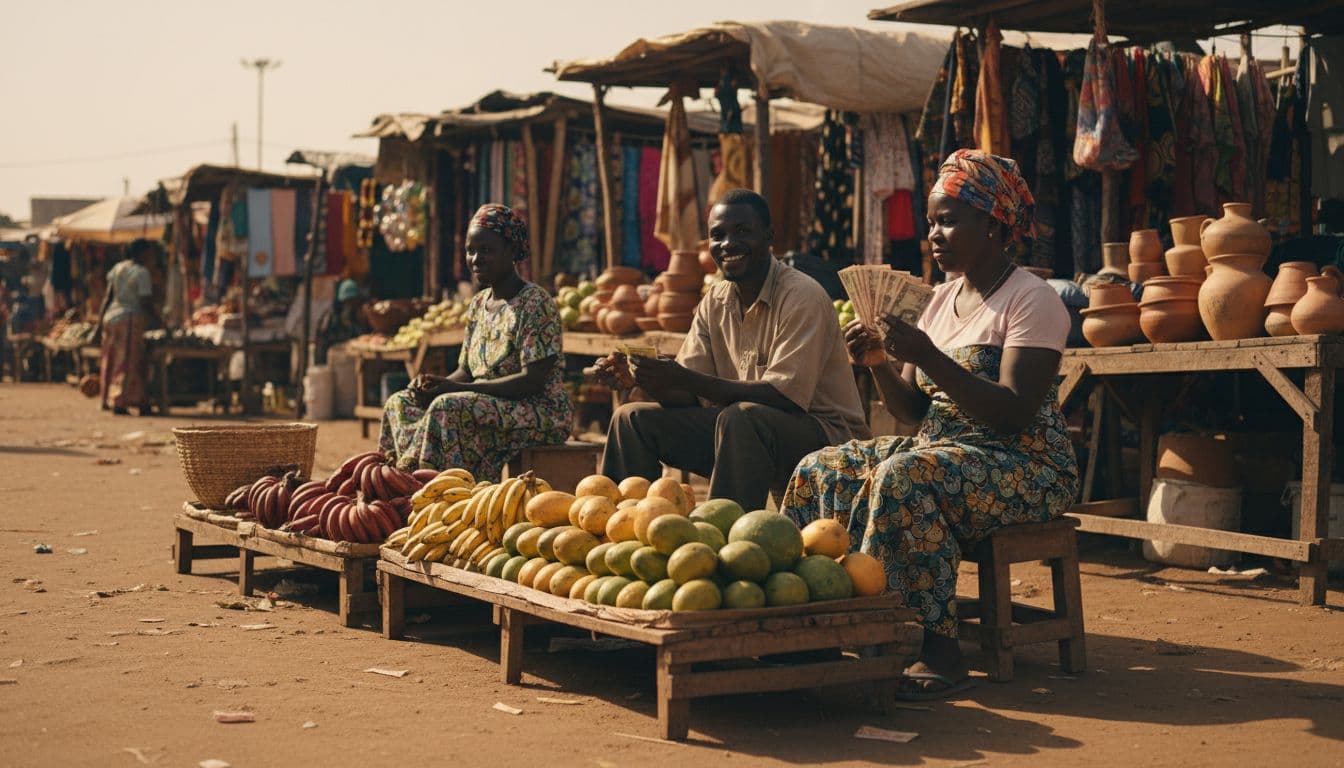
A large share of African workers earn money in the informal economy. Income often comes in waves, not on a fixed payday. That makes monthly or annual premiums hard to promise.
When cash is tight, people choose food, rent, school fees, transport, and medicine first. Insurance slips down the list because the benefit is future-facing, while today's bills are real and urgent. As a result, many households stay uninsured, even when one bad week could wipe out savings.
This is one reason individual policies remain rare in many markets. Traditional plans often assume stable wages and bank-linked payments. For many people, that model doesn't match daily life. Recent penetration data across Africa shows how strongly that mismatch still shapes the market.
Inflation and weak currencies push insurance prices higher
Inflation makes insurance harder to sell and harder to keep. When imported car parts, building materials, medicines, and labor cost more, claims also cost more. Insurers then raise premiums to keep up.
Weak currencies add more pressure because many replacement costs depend on imports. So even basic cover starts to feel expensive. Some customers respond by buying too little cover. Others drop cover entirely. That's underinsurance in simple terms: people keep a smaller shield because the full one costs too much.
Trust, awareness, and product fit are still major barriers
Money is only part of the story. People also need to believe the policy is fair, useful, and worth paying for. Recent industry reviews, including Kearney's 2025 market review, keep returning to the same point: growth slows when service and product design miss how people actually live and work.
Many people still don't trust insurance enough to buy it
Trust grows slowly and breaks fast. If people hear stories about delayed payouts, denied claims, or unclear terms, they stay away. In many communities, one bad claim story travels faster than ten good ones.
Insurance can then look like a promise with fine print attached. That hurts demand, even among people who can afford some cover. Poor communication makes it worse. If customers don't understand what is covered, they expect disappointment.
If people expect a fight at claim time, they won't buy the policy.
So trust is not only a branding issue. It's a growth issue. Faster claims, plain language, and fair handling matter as much as sales.
Too many products were built for formal workers, not everyday realities
Many older insurance products were built for salaried workers in formal jobs. Yet millions of Africans are traders, drivers, farmers, day laborers, or micro business owners. Their risks are real, but their cash flow is uneven.
A farmer may care more about drought or flood than office property cover. A motorcycle rider may need short-term accident protection. A market trader may want stock cover that doesn't require stacks of paperwork. When products don't reflect daily risks, people don't see the point.
That's why microinsurance gets so much attention. When cover is simple, low-cost, and easy to claim, it fits better. The lesson is plain: insurance grows when products meet people where they are.
Weak systems and uneven rules make growth harder across the continent
Even when demand exists, systems can hold the market back. Poor records, paper-heavy workflows, weak connectivity, and uneven rules all raise costs and slow service.

Bad data and weak infrastructure slow pricing, claims, and digital access
Insurance runs on data. If the data is wrong, prices go wrong and claims take longer. In Kenya, some industry reporting suggests about half of insurance data can become inaccurate because paper records and disconnected systems create errors.
That problem doesn't stay in the back office. Customers feel it when claims drag, records vanish, or policy details don't match. Power outages, weak internet access, and skills shortages make the problem worse. As TechCabal's analysis of data and infrastructure hurdles points out, better technology only helps when the basics work.
Different regulations in each country raise costs for insurers
Africa is not one insurance market. It's many markets with different licensing rules, tax systems, reporting standards, and consumer rules. An insurer operating across borders must adapt again and again.
That raises compliance costs and slows expansion. Policy uncertainty can also delay investment. When health, data, or technology rules shift, insurers often pause product launches until the ground feels more stable.
Regional gaps show why one solution won't work everywhere
South Africa shows what a deeper market can look like, yet it still faces inflation, power-supply strain, and regulatory pressure. Kenya, at around 2.25%, has stronger momentum than many peers but still sits below the level needed for broad protection. Nigeria and Ethiopia, near 0.3%, face a much steeper climb.
Those gaps matter because a one-size-fits-all plan won't work. What helps a mature market improve service may not help a low-penetration market build trust from scratch. Growth has to be local.
Low insurance growth in Africa comes down to a few hard facts: affordability, weak trust, poor product fit, bad data, and uneven regulation. When those barriers stack up, people stay exposed.
The cost is not abstract. In 2024, natural disasters in Africa caused more than $500 million in losses, yet less than 1% was insured in some major events. That means families, farmers, and small firms carried the shock themselves.
Growth is still possible. Insurers that build simpler products, pay claims faster, use better data, and reach informal and low-income customers have the clearest path forward.
Post a Comment